
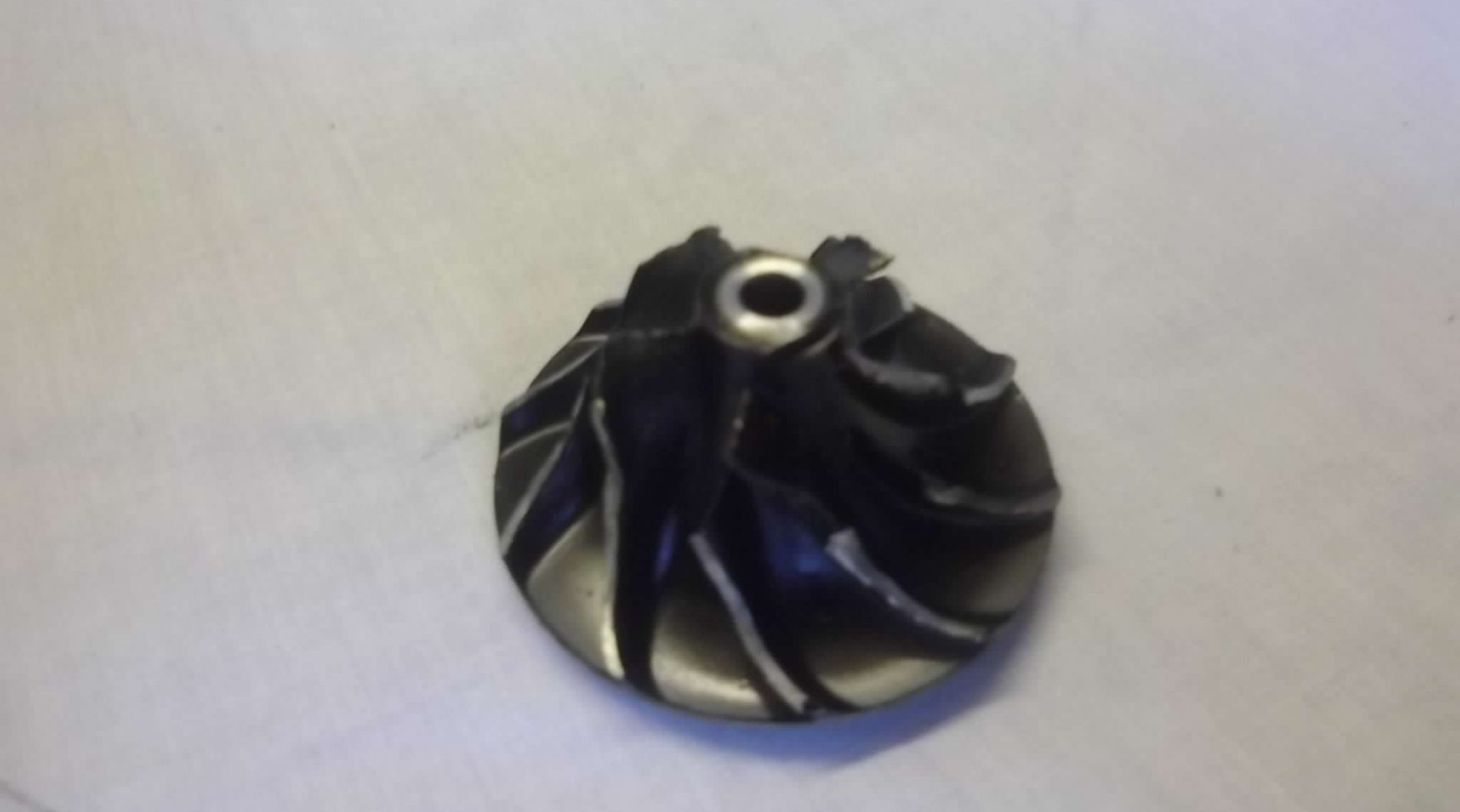
Turbocharger failure can be caused by impact damage to the compressor and turbine blades.
Compressor damage is caused by objects being sucked into the air intake. Turbine damage is usually caused by engine components, such as injector tips or valve train parts.
Turbochargers can spin at over 240,000 RPM and endure temperature of 950 degrees centigrade. In these conditions, even the smallest object ingested or sucked into the turbo can damage or destroy the compressor or turbine, leading to low pressure or total failure.
Causes of impact damage are various, here are the main culprits
- Items sucked into the air intake because of a damaged , poor quality or missing air filter.
- Damaged hoses allowing small particles to enter the air intake.
- Gasket material entering the intake.
- Nuts, bolts, washers, rags or other items left in the intake pipe during servicing.
- Broken engine components, e.g injector tips, valves or fragments of damaged piston.
- Fragments from a previous turbocharger failure.
To prevent turbo failure caused by impact damage
- Ensure all air hoses are in good condition, intact and free from blockages or loose items.
- Always use new gaskets to create perfect seals and avoid gasket breakup.
- Always fit the correct new air filter.
- Check there are no turbo or engine fragments in the system from the previous failure, before fitting the repaired or replacement turbo.
Before you fit your turbo , find out what caused the original failure or you risk a second failure.
Turbochargers are very reliable, less than 1% of turbos fail due to a manufacturing fault with the turbo itself.
However, 95% of turbo failures are because of oil issues or impact damage.
For more information regarding turbo failure you can visit our website www.turborepairs.com and go to our blog page.
You can also give us a call on 01253 933794 to discuss any of your turbo queries